Frequently Asked Questions
-
We are deeply saddened by the recent tragic events in Nepal, and our hearts and prayers are with everyone affected, including the many families and communities who have suffered tremendous loss.
The situation has affected the border crossing originally planned for our pilgrimage. As a result, the 2027 pilgrimage is now planned to enter Tibet via the Tatopani border crossing, which is expected to reopen for international tourists from April 2027.
We are continuing to monitor the situation closely and remain in contact with our trusted partners in Nepal and the relevant authorities. While border procedures and certain travel details may still be subject to change, the pilgrimage dates and our sacred journey to Mount Kailash and Lake Mansarovar remain as planned.
Our intention remains to continue with the pilgrimage in 2027 while adapting the route as necessary. We believe that when it is safe and responsible to travel, continuing pilgrimage also provides meaningful support to the local communities whose livelihoods are connected to pilgrimage and tourism.
The safety and well-being of our pilgrims and the communities we visit will always be our highest priority.
-
We have received several inquiries from pilgrims and friends asking how they can help those affected by the recent tragic events in Nepal.
Many organizations and government agencies are already working to provide immediate assistance. At the same time, there is a growing need for longer-term support, particularly for children who have lost their homes or parents and may need continued support with their care and education.
Our trusted partners in Nepal are currently coordinating with local communities to explore ways to provide long-term support for these children, including assistance with schooling and accommodation. If a suitable organization can be identified to manage this work, we hope to support their efforts. If not, our partners are considering establishing a local trust in coordination with the local community and government authorities.
This work is still being developed, and we do not want to recommend a fundraising effort until we can be confident that contributions will be managed responsibly and reach those who are most in need. We will share further information here once a trustworthy way to contribute has been established.
Our hearts remain with the people of Nepal, and we are deeply grateful to everyone who has expressed a desire to help during this difficult time.
-
Absolutely. Many participants join the pilgrimage on their own. From the moment we gather in Kathmandu, you will be part of a supportive group of fellow pilgrims sharing the journey together.
-
The pilgrimage involves travel at high altitude and includes the Kailash parikramā, a multi-day trek around Mount Kailash. Participants should be in good general health and prepared for several days of walking in mountainous terrain.
No technical climbing experience is required, but physical preparation before the pilgrimage is strongly recommended.
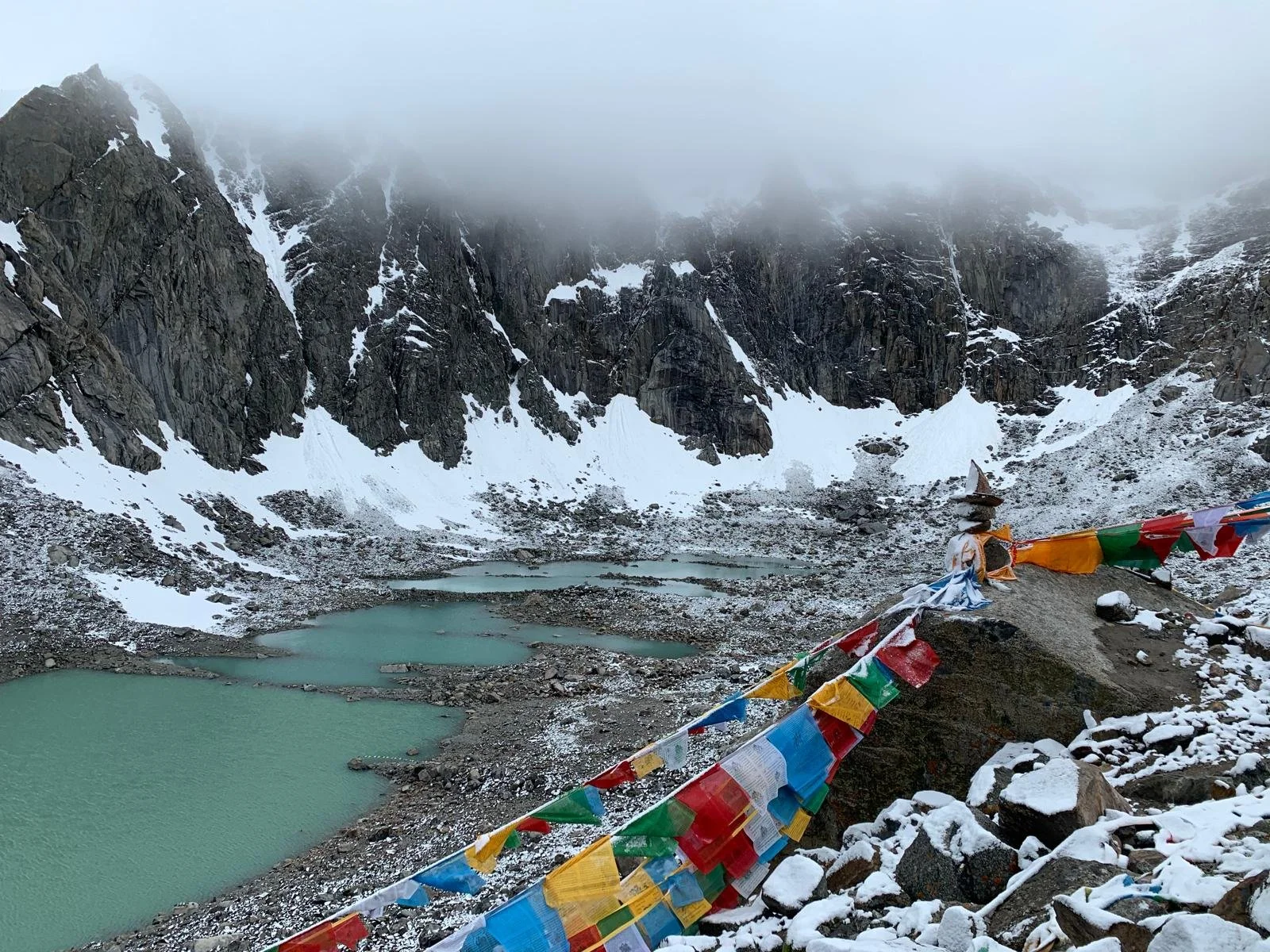
The pilgrimage takes place on the Tibetan plateau, with elevations generally ranging between 4 500 and 5 600 meters above sea level. The highest point of the Kailash parikramā is Dolma-La Pass at approximately 5 630 meters.
-
Although our pilgrimage takes place in June, this is considered one of the best times to visit the Mount Kailash and Lake Mansarovar region.
In Nepal, the monsoon season officially begins around the middle of June, but significant rainfall typically does not develop until the first week of July. During our journey, the road from Kathmandu to the Nepal–Tibet border is generally safer and clearer than later in the season.
Once we enter Tibet, weather conditions are different. The Mount Kailash region lies in the Himalayan rain shadow, meaning it receives significantly less rainfall than Nepal's lower elevations. Even during July and August, when many pilgrimage groups continue to travel, rainfall in Tibet is usually light.
In June, daytime temperatures in the Mount Kailash region generally range between 5°C and 15°C. As the winter snow begins to melt on the higher mountain passes, travel conditions are typically favorable, and clear skies are common, offering excellent views of the Himalayan landscape.
While mountain weather can never be guaranteed and conditions may change, June is widely regarded as one of the most favorable months for undertaking the Mount Kailash pilgrimage.
-
We take care of the entire process for you.
Our local operating partner, Spiritual Expeditions Nepal, has extensive experience arranging the permits and visas required for travel to Tibet. Once your booking has been confirmed, we will provide clear instructions regarding any documents we need from you, such as a copy of your passport and a recent passport-style photograph.
Approximately one month before departure, Spiritual Expeditions Nepal will arrange the required Tibet Travel Permit on behalf of the group. Where a Chinese Group Visa is required, the application will be coordinated in Kathmandu after the group arrives. Participants are not expected to navigate the application process on their own.
Currently, citizens of many European countries, Canada, Australia, and several other nationalities may be eligible for visa-free entry to China under temporary Chinese visa policies. Participants who qualify generally do not require a Chinese Group Visa or pay the associated visa fee. However, all participants require a Tibet Travel Permit, which we will arrange on your behalf.
Visa regulations are subject to change, and we will review each participant's individual requirements well before departure. Our goal is to make the process as smooth and straightforward as possible, allowing you to focus on preparing for the pilgrimage rather than paperwork.
-
During the Tibet portion of the pilgrimage, participants will be provided with wholesome vegan meals prepared by our dedicated kitchen team. Meals will include a variety of continental-style dishes, along with traditional Nepali vegetable-based meals on selected days. Fresh fruit will also be provided whenever available.
In Kathmandu, breakfast and dinner are included. Lunches are not included, allowing participants the flexibility to explore local cafés and restaurants during free time and sightseeing activities.
We aim to provide nourishing, satisfying, and predominantly plant-based meals that support both physical well-being and spiritual practice throughout the journey.
-
Accommodation varies throughout the pilgrimage depending on the location.
In Kyirong, Saga, Darchen, and Paryang, we stay in comfortable modern hotels with private en-suite bathrooms and hot showers, providing the opportunity to rest and refresh before and after the Mount Kailash parikramā.
During the four nights at Lake Mansarovar, Diraphuk (two nights), and Zutulphuk, accommodation is much more basic due to the remoteness of the region. These locations are served by government-operated guesthouses where pilgrims stay in shared dormitory-style rooms, typically accommodating 4–8 people.
At these guesthouses:
Shared public toilets are located outside the guesthouse buildings.
Private en-suite bathrooms are not available.
Shower facilities are not available.
These simple accommodations are a traditional and expected part of the Mount Kailash pilgrimage. While they are more modest than the hotels used elsewhere on the journey, our experienced local team will do everything possible to ensure you are safe, comfortable, and well supported throughout your pilgrimage.
Many pilgrims find that embracing these simpler conditions becomes a meaningful part of the experience, allowing them to focus more deeply on the spiritual purpose of the journey.
-
No. The pilgrimage is open to participants of all backgrounds and experience levels. Whether you have practiced yoga for many years or have never attended a yoga class, you are welcome to participate at your own pace. All practices offered during the journey are optional.
Yoga is available and enriching, but it is not a requirement. The pilgrimage comes first.
-
The yoga sessions are designed to support the pilgrimage experience rather than function as intensive physical training.
Practices may include gentle asana, mobility exercises, breathing exercises (prāṇāyāma), meditation, relaxation, and other practices that help prepare the body and mind for travel, altitude, and spiritual reflection.
Sessions will be adapted to the conditions of the journey, including altitude, travel schedules, and the needs of the group. The emphasis is on well-being, awareness, and integration rather than physical performance.
No previous yoga experience is required, and participation in all sessions is entirely optional.
-
We highly recommend bringing your own lightweight travel yoga mat if you plan to participate in the yoga sessions offered during the pilgrimage.
A foldable, compact mat is ideal, as it takes up minimal space, is familiar and comfortable to practice on, and helps reduce the need to purchase additional equipment during the journey.
If you prefer not to travel with a mat, yoga mats are readily available for purchase in Kathmandu before the pilgrimage begins.